
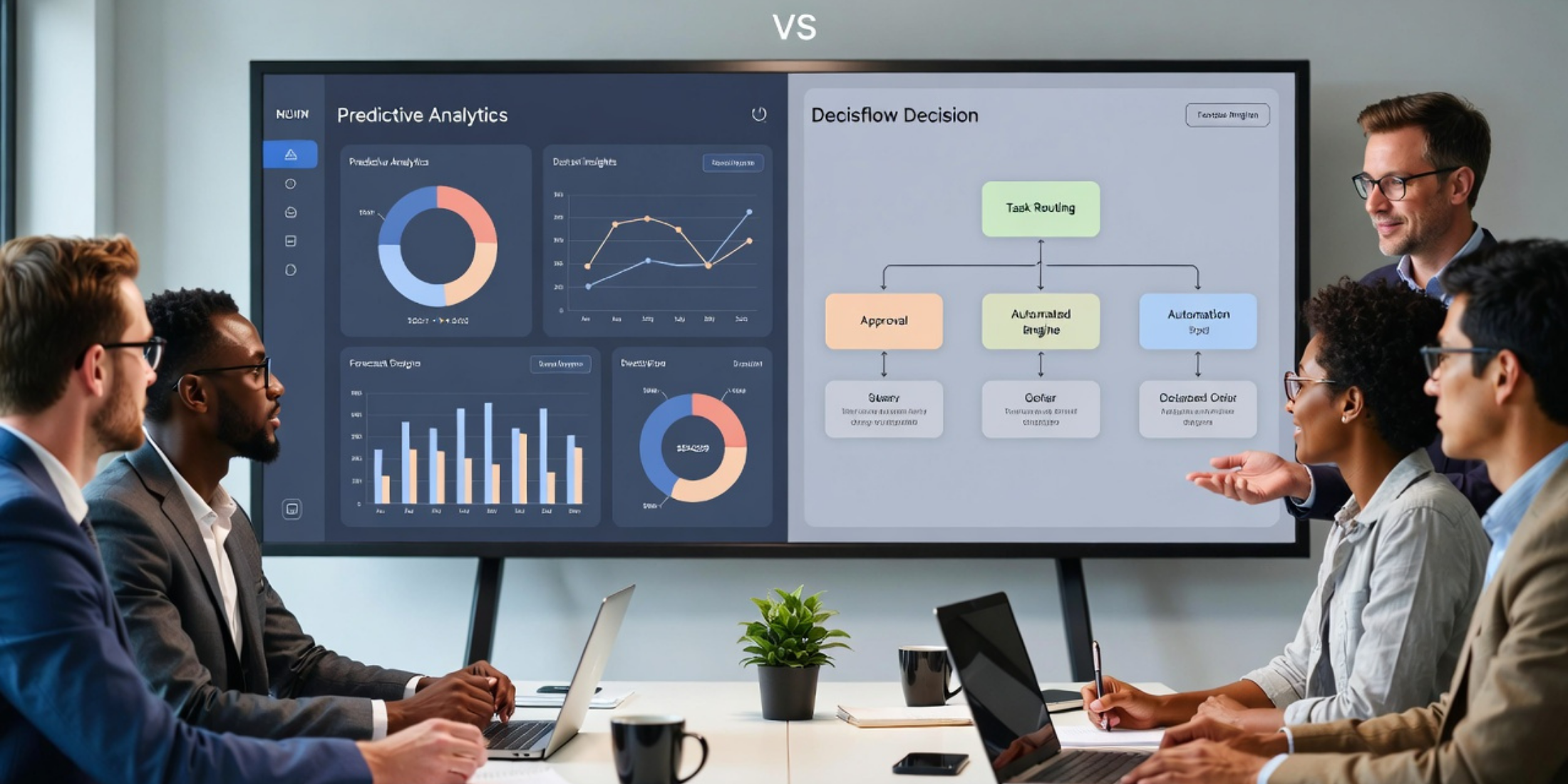
Predictive Analytics Vs Decision Engines
Teams often use "predictive analytics" and "decision engines" interchangeably, but they solve fundamentally different problems. Understanding the distinction is critical to choosing the right tool for your business.
The Core Difference
**Predictive Analytics** answers the question: "What is likely to happen?" It uses historical data and machine learning models to forecast future outcomes—such as customer churn probability, sales revenue, or equipment failure likelihood.
**Decision Engines** answer: "What should we do about it?" They take predictions as inputs and recommend or execute the optimal action based on business logic, constraints, and desired outcomes.
When to Use Predictive Analytics
Predictive analytics is ideal when your primary goal is understanding trends and probabilities. Common applications include:
- Forecasting demand for inventory planning
- Identifying at-risk customers before they churn
- Predicting equipment maintenance windows
- Estimating project completion timelines
These use cases require insight but not necessarily immediate action.
When to Use Decision Engines
Decision engines shine when you need to act on predictions in real-time. Examples include:
- Approving or denying customer credit applications instantly
- Routing support tickets to the optimal agent
- Dynamically pricing products based on demand
- Triggering fraud prevention measures automatically
The Optimal Approach: Predict + Decide
The most powerful strategy combines both. Use predictive analytics to generate accurate probability scores, then feed those into a decision engine that determines the best action based on business rules and constraints.
DataLoomsai enables this hybrid approach, letting you chain predictions with intelligent decision logic in a single, unified workflow.
Ready to build your first AI workflow?
Request a Demo